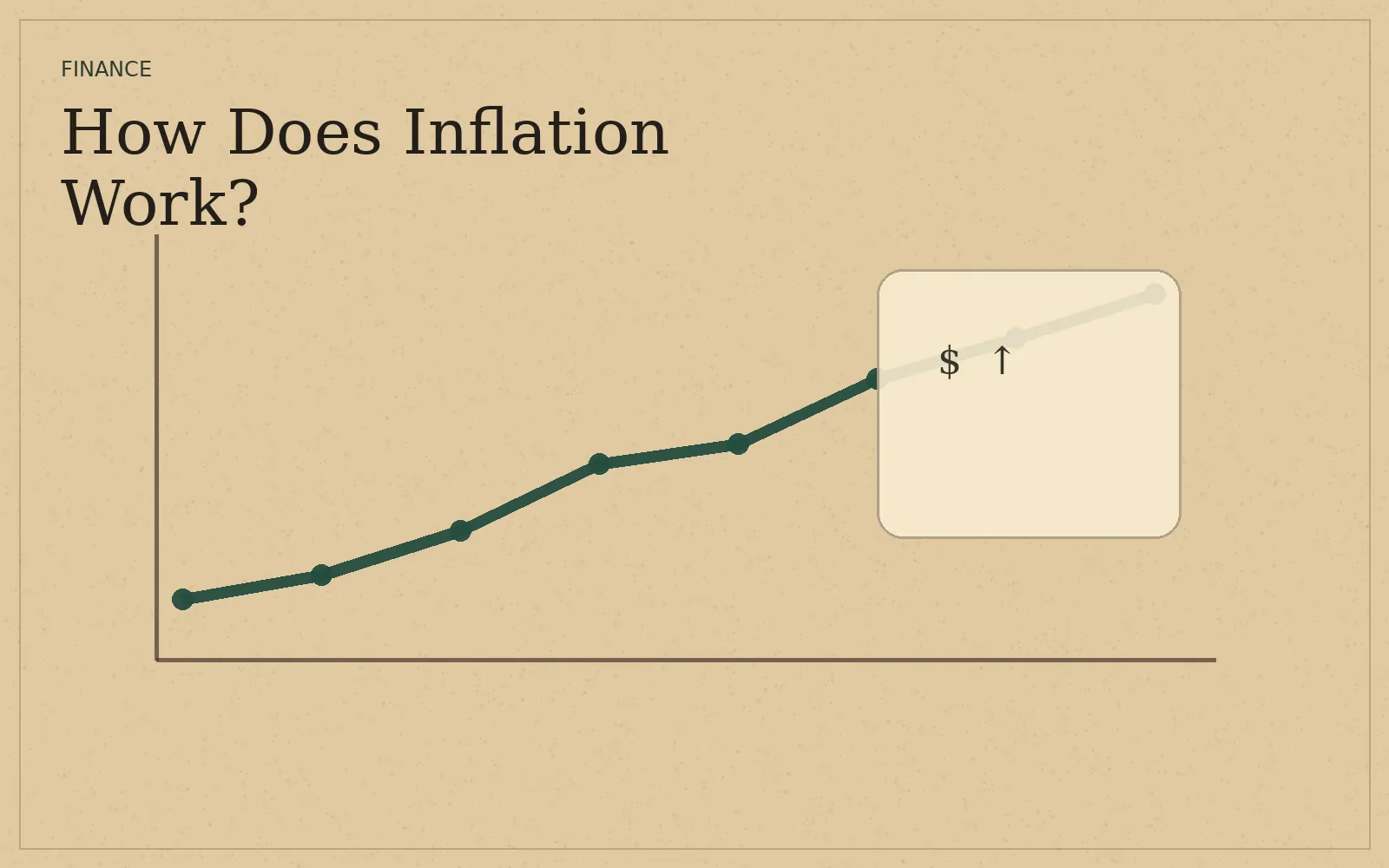
Inflation is one of those economic words that appears in everyday conversations because it eventually shows up in everyday spending. Groceries cost more, rent can change, services become more expensive, and the same paycheck may not stretch as far as it once did.
At its simplest, inflation is a sustained increase in the general level of prices over time. It does not mean that every price rises at the same rate, and it does not mean every household experiences the same change in living costs.

Why do prices rise?
There is no single cause. Prices can rise when demand grows faster than the supply of goods and services, when production costs increase, when supply chains are disrupted, or when broader economic conditions change.
Sometimes several forces happen at once. A business may face higher energy, labor or transportation costs while customers are also willing to pay more. The final price can reflect both sides of that equation.
How is inflation measured?
One widely used measure in the United States is the Consumer Price Index, or CPI. The U.S. Bureau of Labor Statistics describes CPI as a measure of the average change over time in prices paid by urban consumers for a market basket of goods and services.
The word average matters. Your personal spending pattern may look very different from the basket used to calculate a national index.

Why does inflation feel different for different people?
Imagine two households. One spends a large share of its budget on housing and transportation. Another spends more on travel, dining and entertainment. If housing and fuel prices rise quickly while restaurant prices rise slowly, the first household may feel more pressure even if the national inflation rate is identical for both.
This is why a headline inflation number should be treated as a broad measure, not a personal cost-of-living calculator.
What happens when inflation slows?
Slower inflation does not necessarily mean prices are falling. It usually means prices are still increasing, but at a slower rate. Falling prices across the economy are a different phenomenon known as deflation.
That distinction is important when reading economic news. A lower inflation rate can be good news for price stability even when shoppers do not see yesterday’s prices return.
What can households do?
There is no single personal strategy that works for everyone. A practical approach is to understand where your own spending is changing, review recurring costs, keep an emergency buffer when possible, and avoid making major financial decisions based on a single headline number.
This article is educational, not personalized financial advice. For a broader explanation of how everyday systems work, you can also read how Wi-Fi works and how GPS works.
In one sentence
Inflation is a broad rise in prices over time, and its real-world impact depends on what people buy, how prices change and how their incomes change alongside them.
Related reading: Why Do You Feel Sleepy After Lunch? · How Does GPS Work?